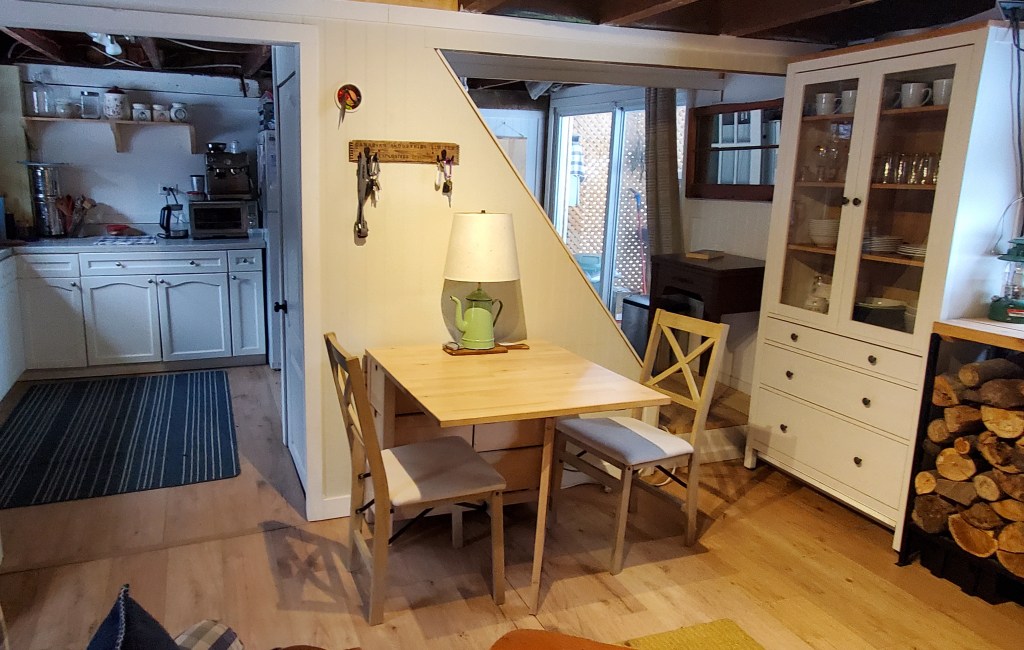
I see so many mistakes being made when it comes to creating a multi-functional space that supports multiple purposes while maintaining flow and cohesiveness. So let’s make the best out of a small space… using my own living room as an example (which went through A LOT of trial and error before we got it right).
When living in a small home, functionality paired with your ideal style is key.
My living room is also my dining room. And also my front entrance. It’s a grand total of 160 square feet (and the the woodstove actually takes up 25 square feet of it) So my husband and I had to get creative while we renovated the run-down cottage house we purchased three years ago.
I’m happy to share the tips and tricks that worked for us when creating out cozy little living room space. It took A LOT of trial and error to get it right. But first, here is what our living room looked like when we first bought our house:
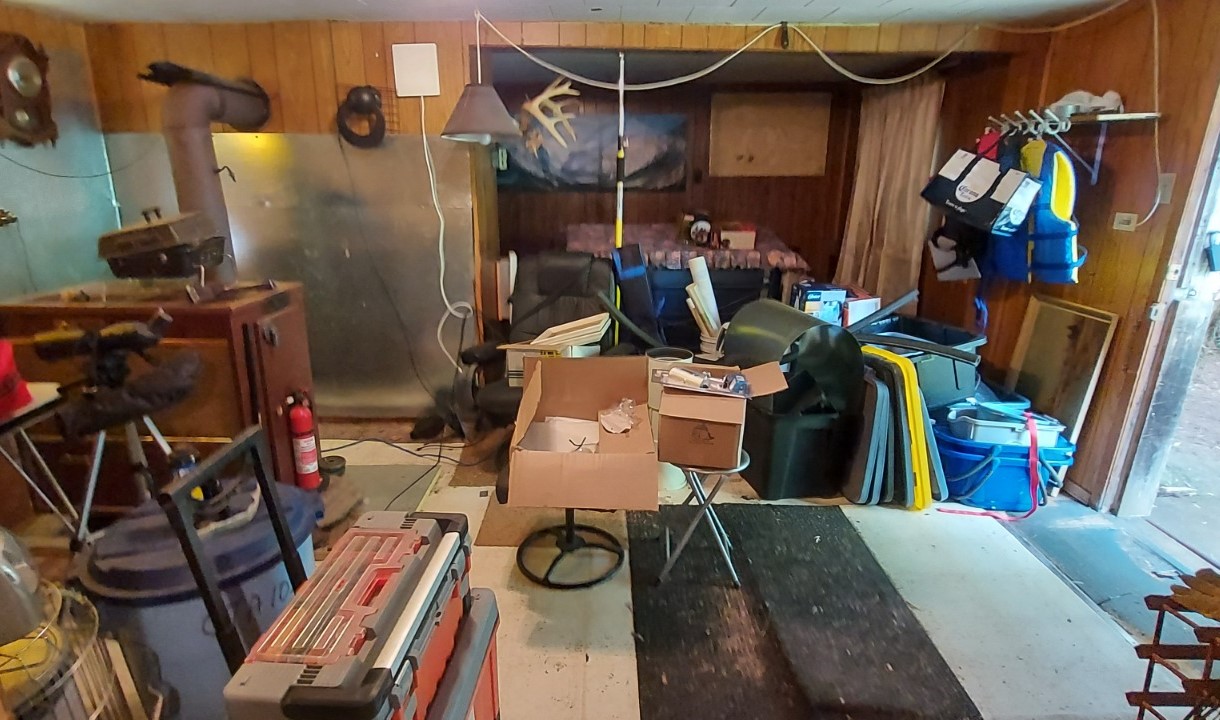
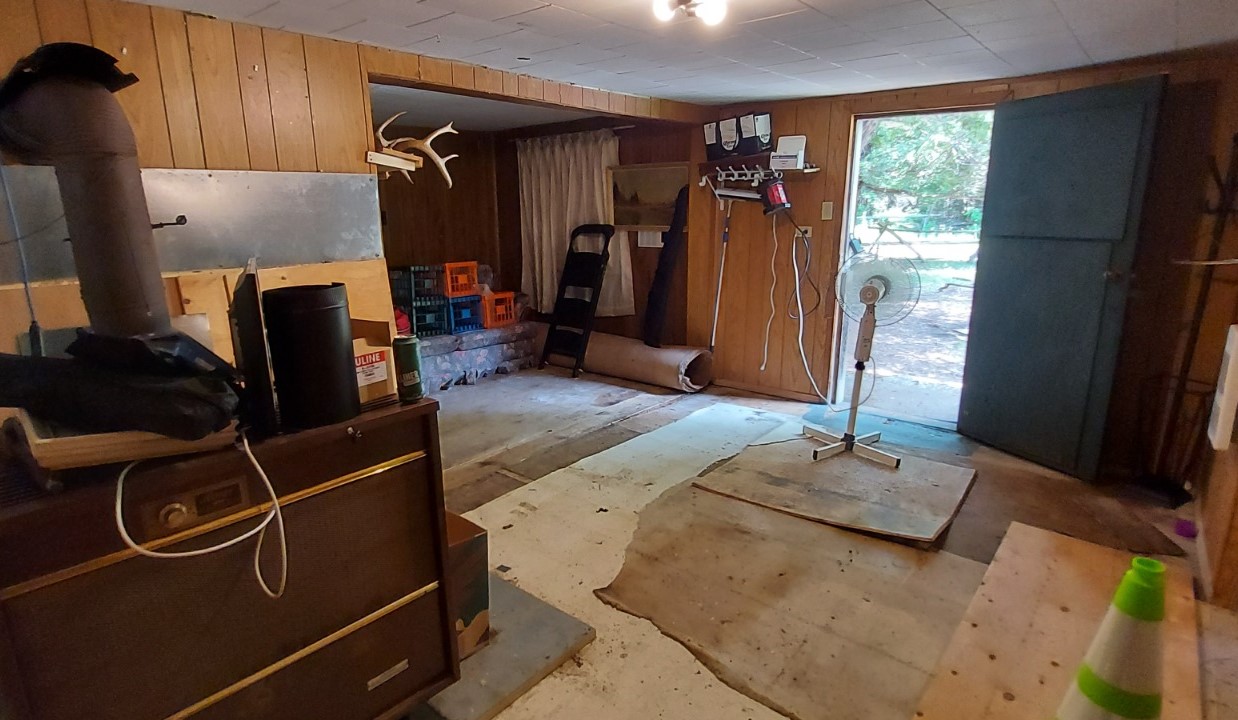
Not fun right? Although we still have lots left to do, here’s what it looks like right now:
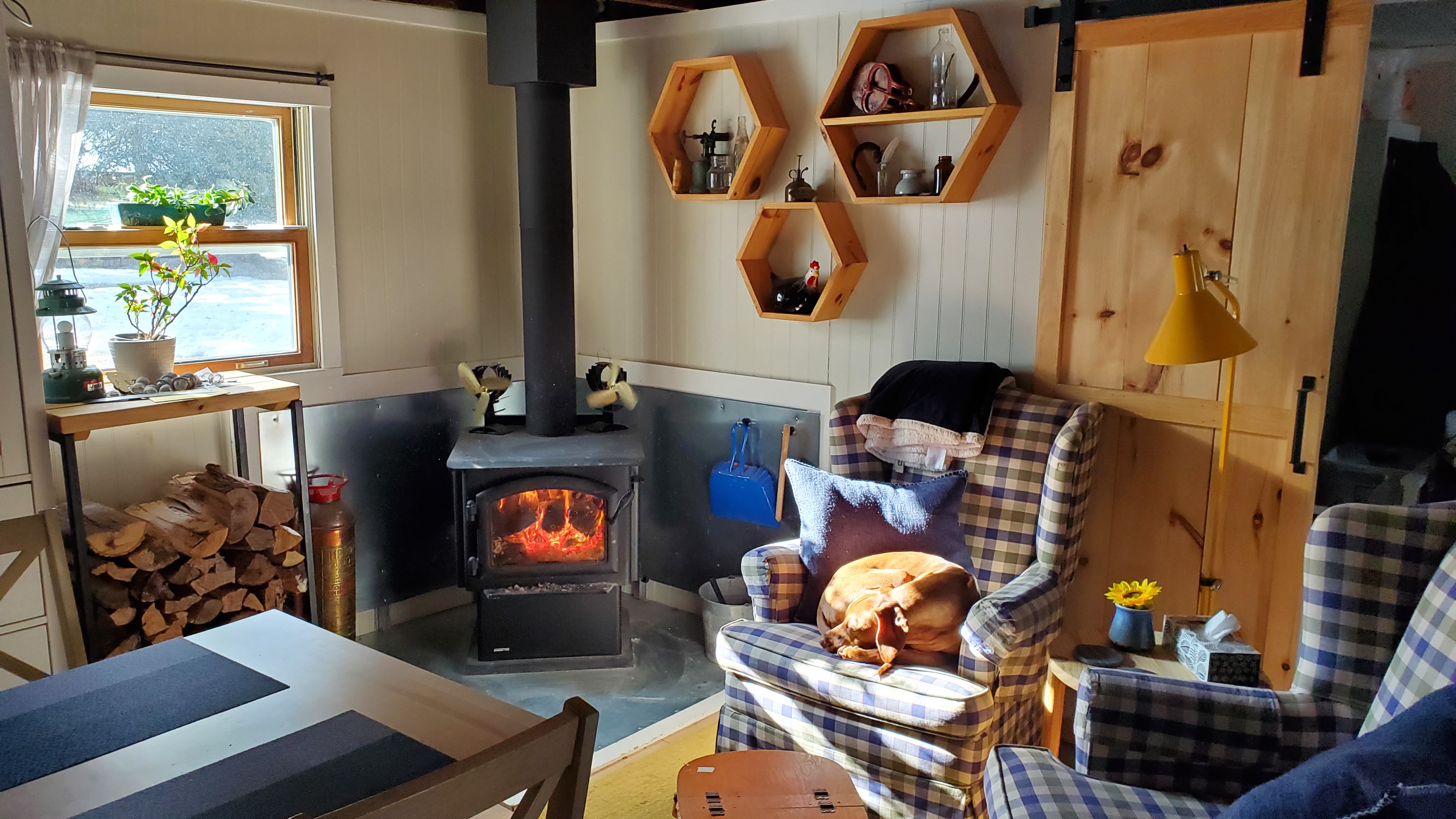

I’m going to go ahead and say this is a massive improvement from what we originally bought.
So here are the 5 common mistakes to avoid when styling your small-space multi-functional living room:
(If you’re short on time, you can scroll to the bottom and read the Key Takeaways that nicely summarize what’s in this post).
Mistake #1: Choosing the wrong drop-leaf table & folding chairs.
If your tiny living room doubles as your dining room like mine does, there’s simply no way you can fit a full length dining room table in there along with living room furniture.
A drop leaf table, like the one we bought from Ikea, is perfect for when 2-3 people are dining, with the ability to open the second leaf when we need to accommodate 4-6 guests. The best part is we can close both leaves when we need extra space.
We happened to snag 4 folding dining chairs on clearance from Bed, Bath & Beyond which perfectly matched our table. When we aren’t entertaining, the other 2 chairs are folded and tucked away. Absolutely perfect for a small space. Here are some photos of how the table and chairs look when we were still in reno mode:
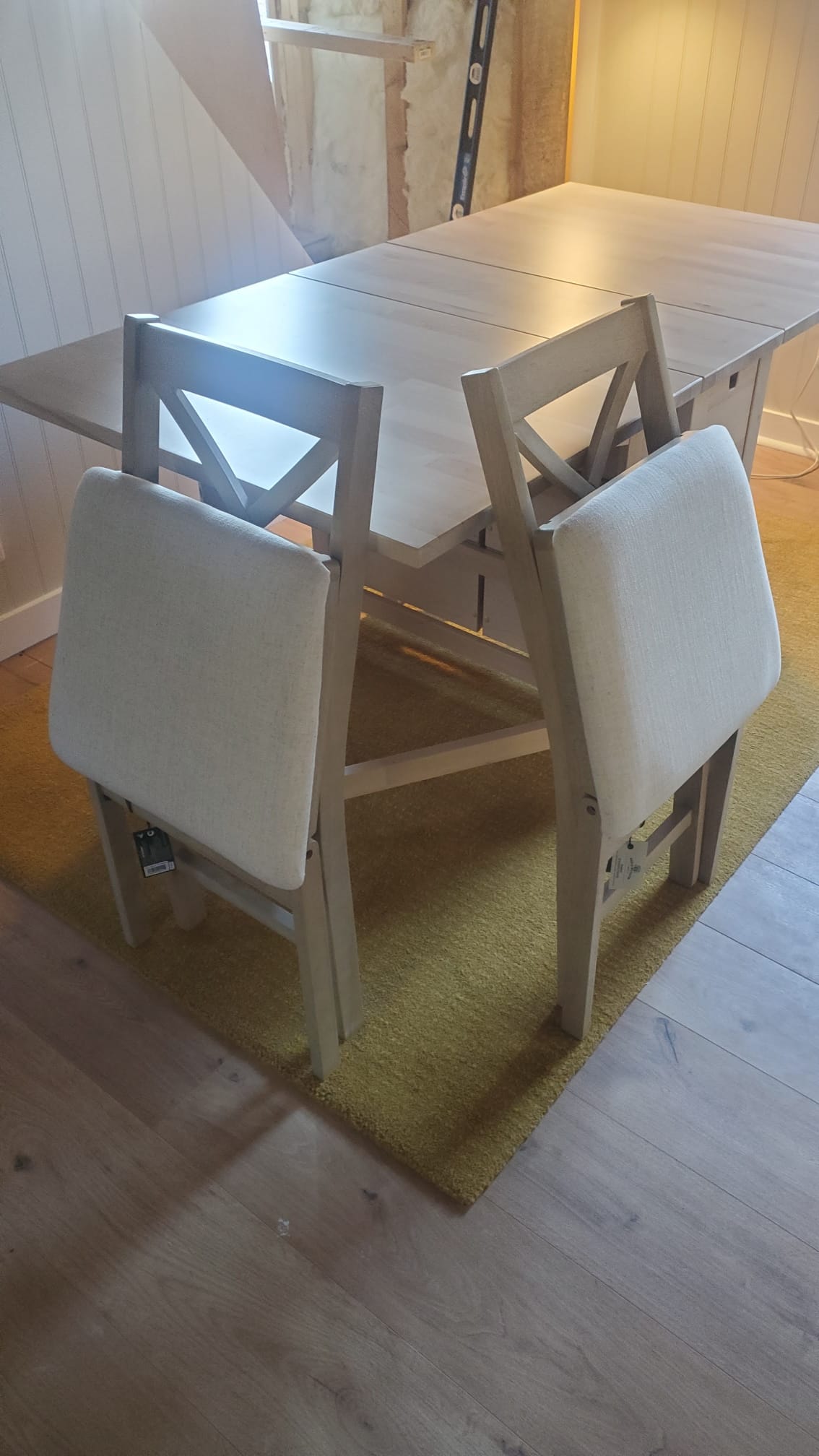
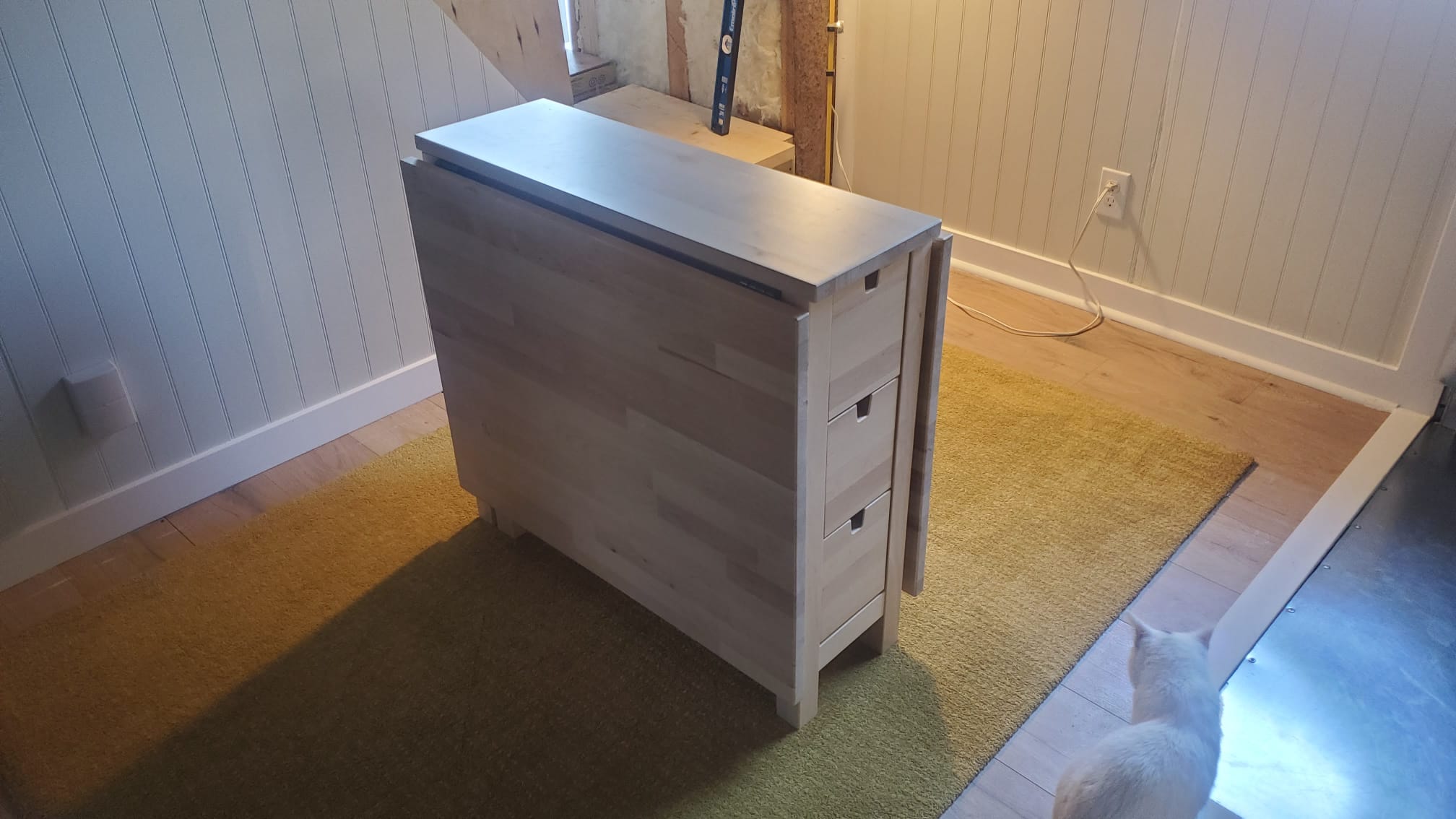
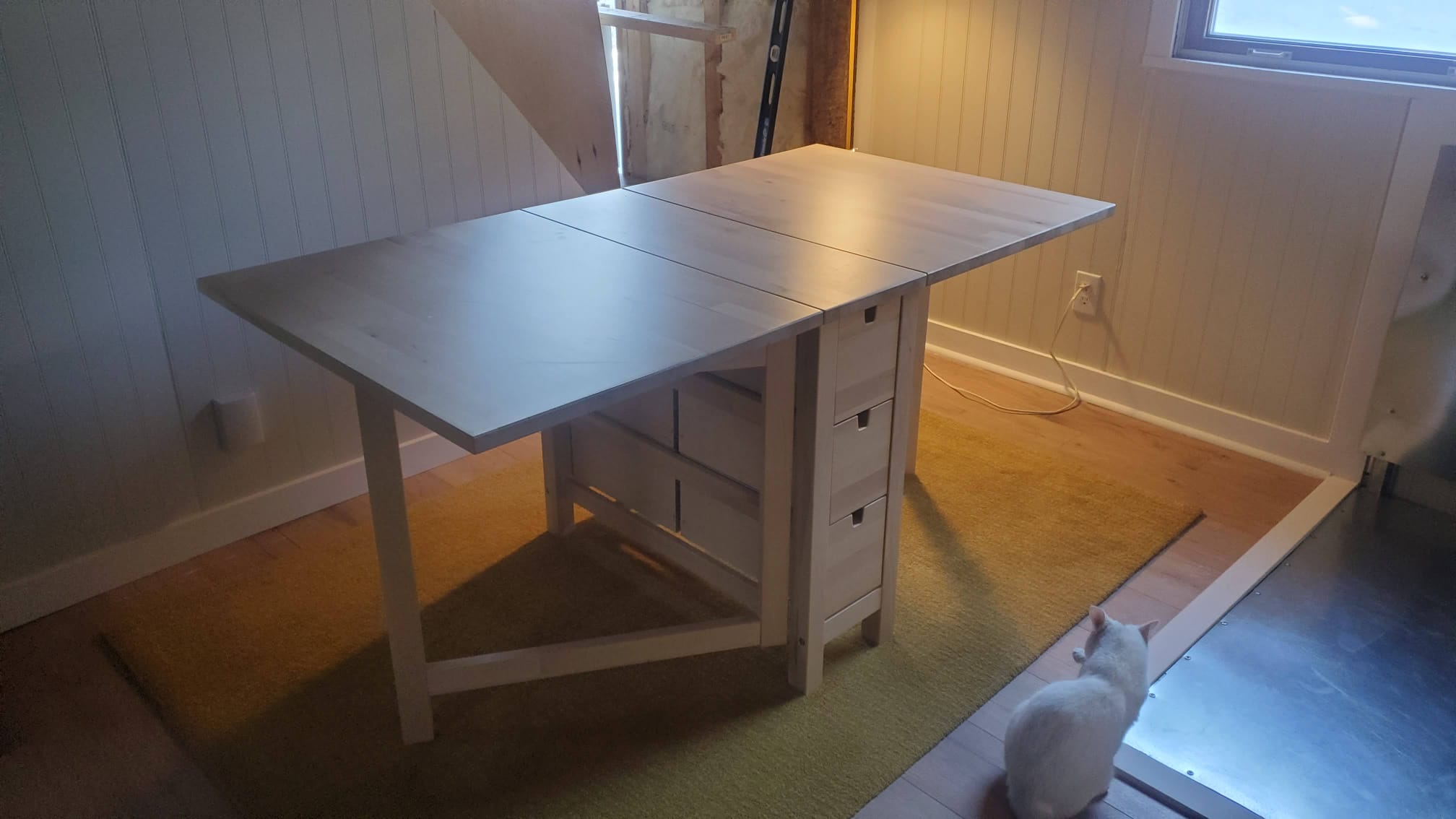
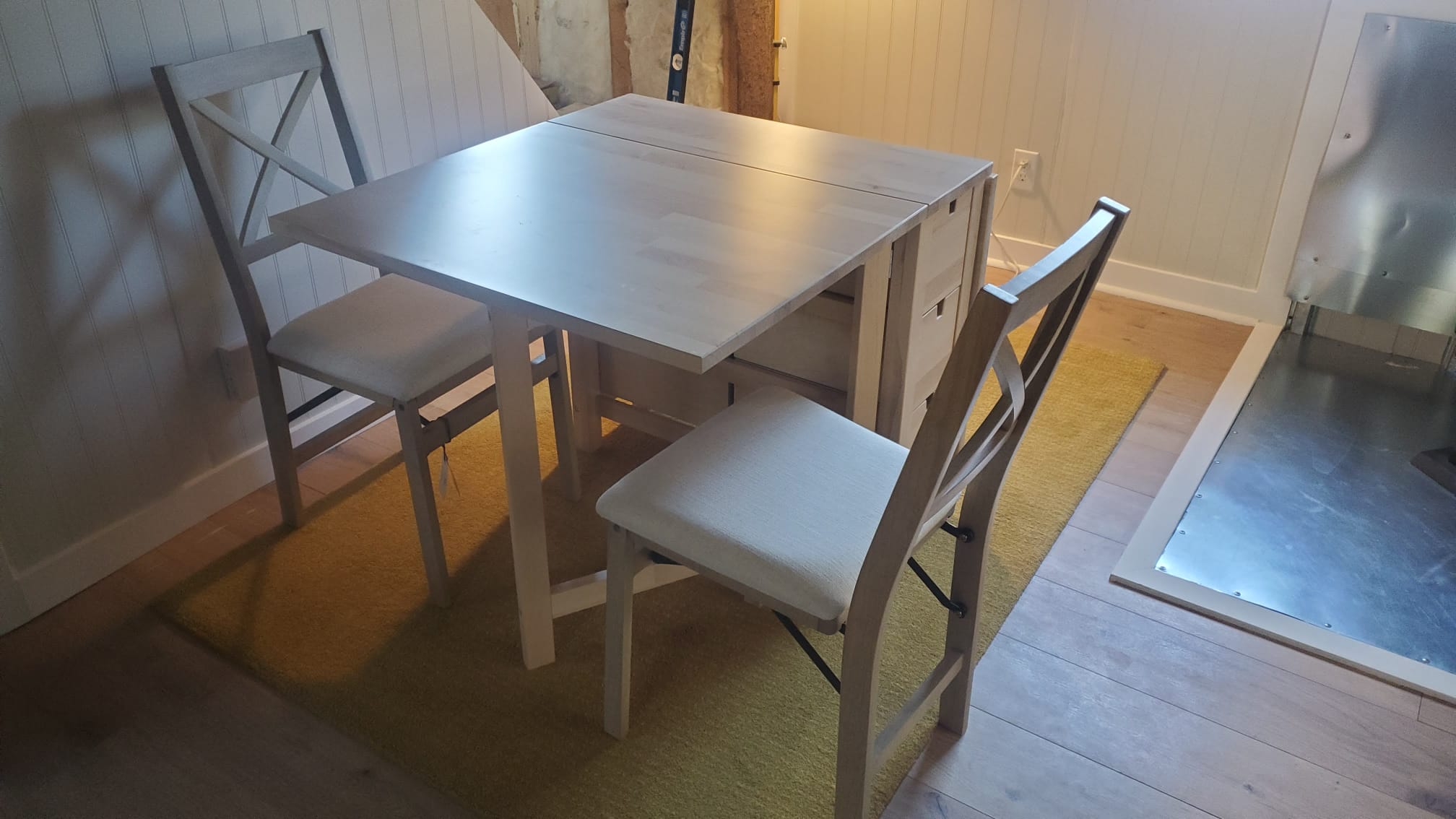
Here’s where we went wrong:
Although I love the table, it has 6 storage drawers, and the overall build of this table makes it quite heavy to move on your own. If you’re planning to move this table every day to open both leaves, I would recommend finder a lighter-weight table – luckily there are lots of drop leaf dining tables out there!
The chairs wonderfully pair with my table, and their minimalist frame means they take up precious little space, but unfortunately just by regularly sitting in them, all the washers and bolts keeping the folding mechanism of the chairs together start to loosen. So you have to remind yourself to regularly check the nuts and bolts to make sure your chair doesn’t fall apart on you while you’re sitting down to dinner – not ideal. These chairs are not designed for daily use. Make sure to find something more sturdy if you’re planning to use your dining chairs every day!
Mistake 2: Picking furniture that is not easy or flexible to move and rearrange.
Here’s another photo of my living room. Note the 2 armchairs, the small coffee table, and vintage picnic basket that acts as our footrest/extra storage.

All of these can be easily moved to the side when we need to expand our dining table for more guests. We previously had a love seat in this space – it definitely was not a movable piece of furniture and offered little to no flexibility. Flexibility is key in a small space that serves multiple functions.
We were lucky enough to snag our armchairs on Kijiji for $200. You definitely want to keep an eye out for smaller sized armchairs like these – there are lots of armchairs out there on the bulkier side that would take up too much space and would be too difficult to move. A good starter set would be the STRANDMON armchairs from Ikea. And if you’re on a budget, people are always selling this model on Kijiji or Marketplace.
Mistake #3: Not using a carpet (or using the wrong style) to define areas of your multifunctional living room.
Take a look at where our carpet is situated. Rather than laying it in the center of the room, we moved it to the right so that it balances out the seating area, and makes the dining area – although small – it’s own space.
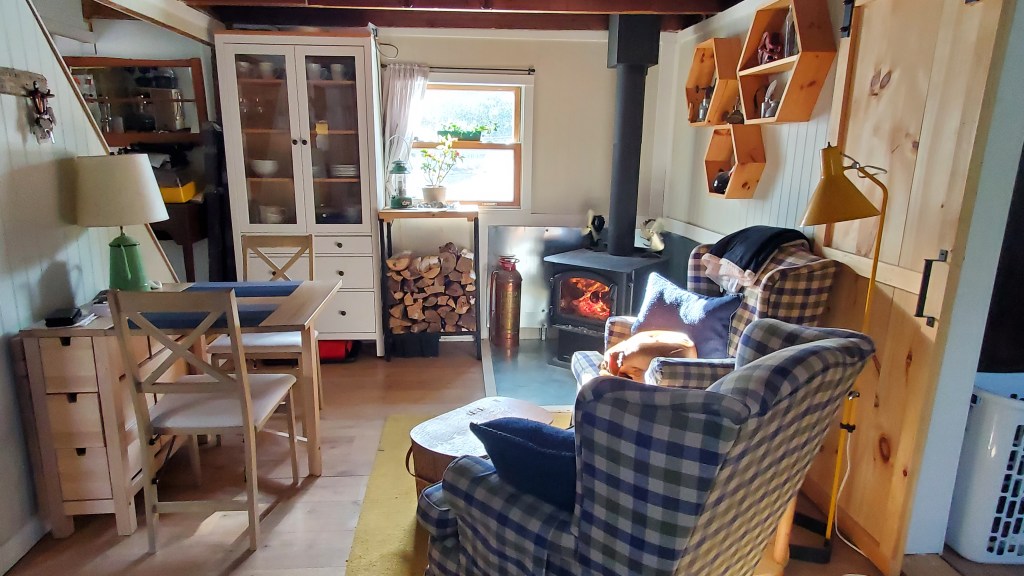
It’s so important to find a carpet with a subtle colour and pattern. In a space this small, the purpose of the carpet is to fill in, compartmentalize, and complete the room, rather than completely take it over with bold patterns and stark colours. It’s placement in a room is what subtly divides a space and gives it distinct purposes.
Mistake #4: Not grouping furniture of the same purpose together.
Adding onto the carpet defining different spaces, all furniture should be grouped together as best as they can be within your tiny living space. As an example, check the placement of the furniture in my living room:
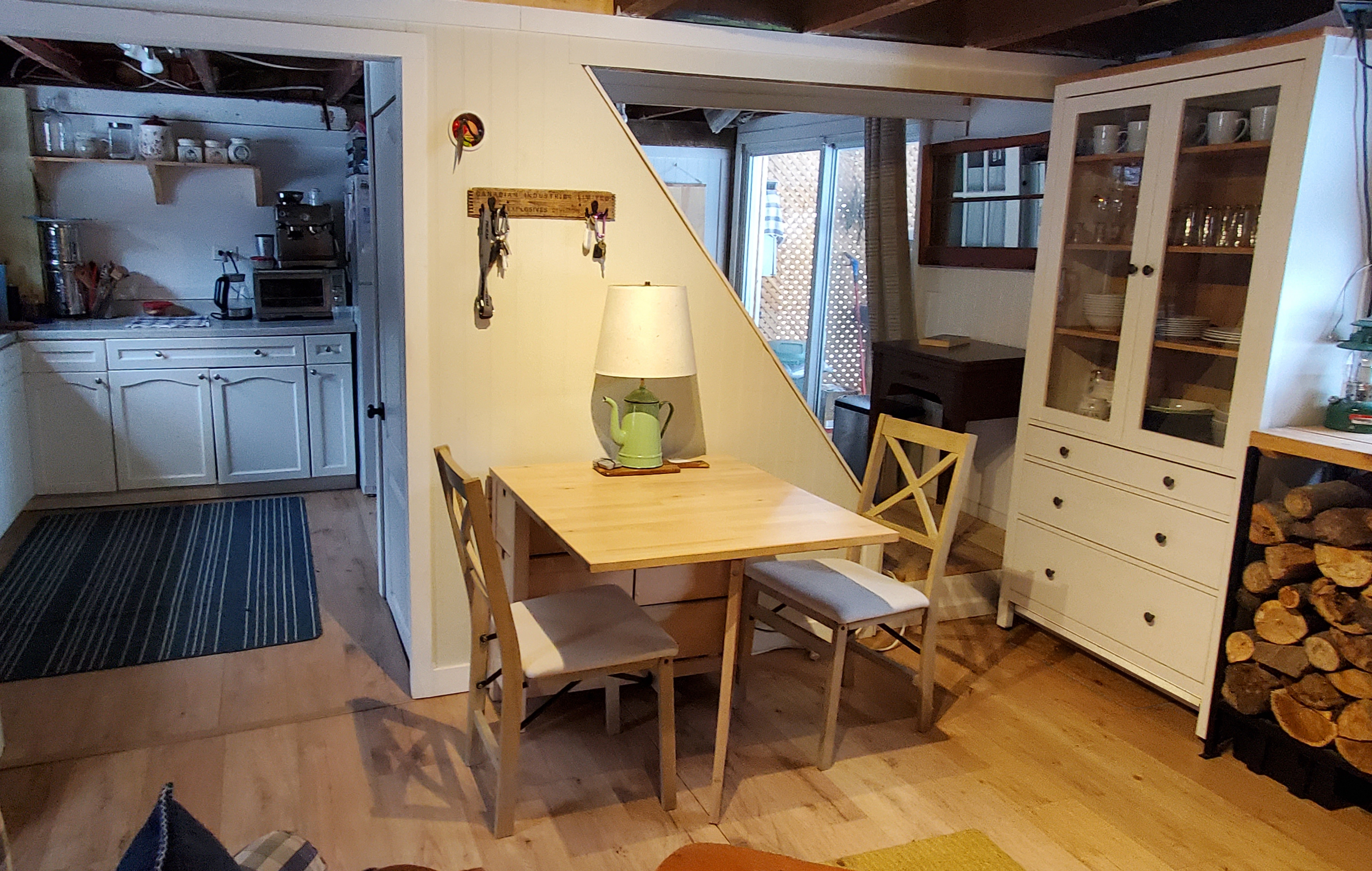
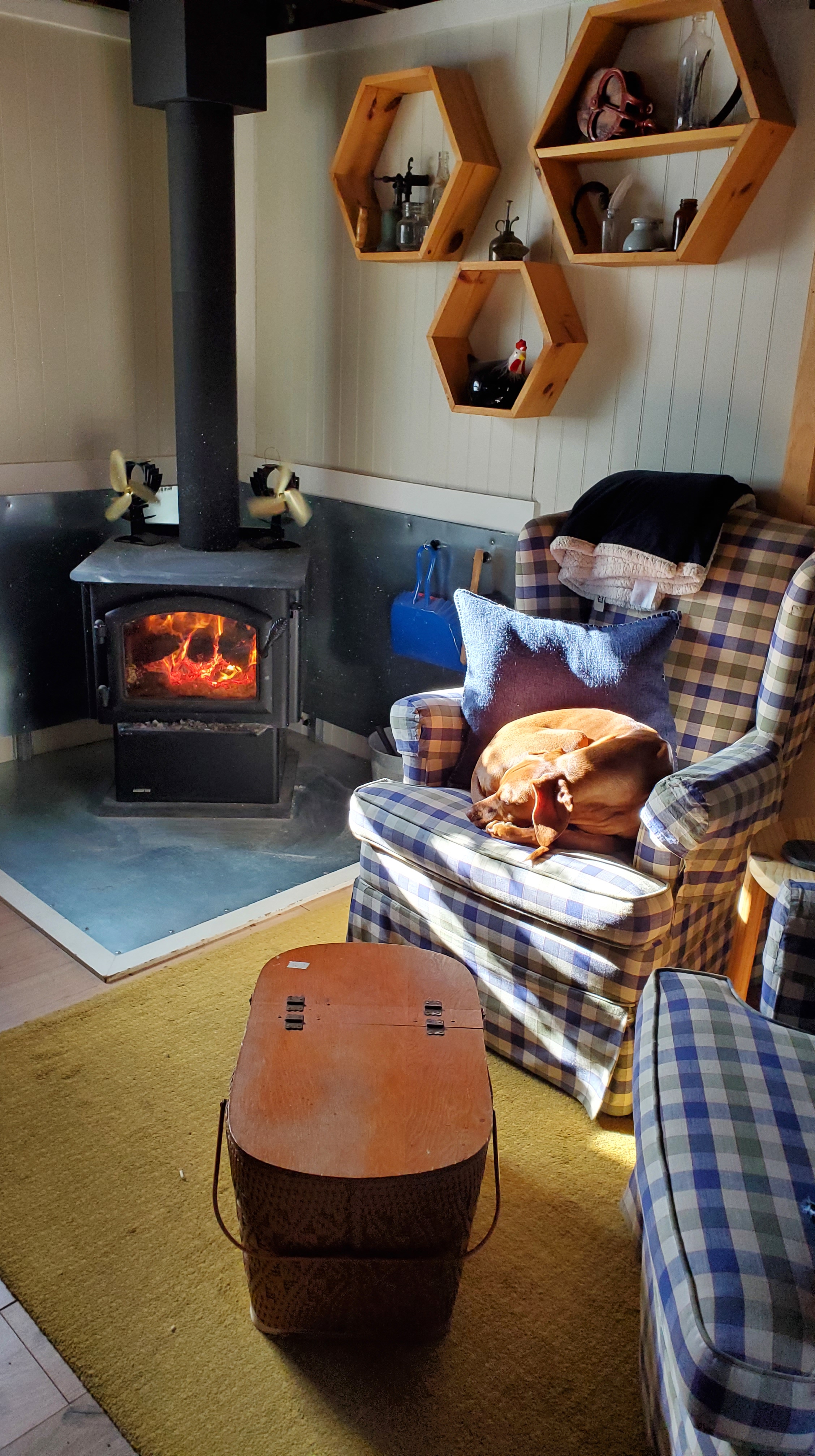
The hutch which contains everything necessary for dining, is of course on the same side as the dining room table. The wood holder/table is of course taking it’s own place next to the wood stove. And as previously mentioned, all sitting and lounging furniture is of course grouped together in its own little spot.
Although this seems like such a simple idea, you’d be surprised how many times we rearranged our living room before we found balance. Everything just seemed slightly off. Before we grouped everything together like this, we were living in a mildly chaotic space.
Mistake #5: Not taking advantage of the natural circulation of your living room.
This is a tricky one, depending on the layout and structure of your home, and whether you rent or own.
Take a moment to critically think about how you move through your home – in this case your living room. What other spaces does it connect to? What is your natural movement through your home? Try to keep pathways unobstructed and lay out your multi-functional space around your direct circulation paths.
Let’s use my living room as an example again. A frequent circulation route in our home is between the front door and the wood stove – we regularly bring wood in from outside to stack in our wood holder. This created the direct divide between the seating area and our dining room table.
Now take a look at this before and after photo. The previous living room was simply a dead space. We knocked out a portion of the wall that we knew was not load bearing to create an alternate route due to how small the living room was. Now when we host guests, both ourselves and our guests have multiple ways to exit the room without requiring others to get up and out of the way. In this way, the dining area remains a defined space with 2 other access points to the rest of the house, and the seating area remains separate.


Key Takeaways
You absolutely have to get both creative and critical with how you arrange a small space.
- Embrace furniture that folds, and is modular and easy to move!
- Explore the wonders a carpet can do in dividing a small space without everything looking crammed together.
- Try your best to keep furniture of the same purpose together (hutch with dining table, coffee table with armchairs or couch, etc.).
- Circulation is key, and will certainly help you determine the layout of your multi-functional living room. It will create natural divides in your room which can dictate the placement of furniture serving different purposes.
Conclusion
If you’re working with a space as small as mine, you’ll rearrange your furniture multiple times before it finally feels right. This is definitely a trial and error type of situation.
It’s even more fun when you’re on a budget like us – that means thrifting, Facebook Marketplace & Kijiji finds, and DIYing (By the way, more on our DIY journey to come, so stick around and stay tuned)!
If you take on the challenge of re-designing your small space, I’d love to see what you come up with!





 No Fret Homestead
Leave a comment